
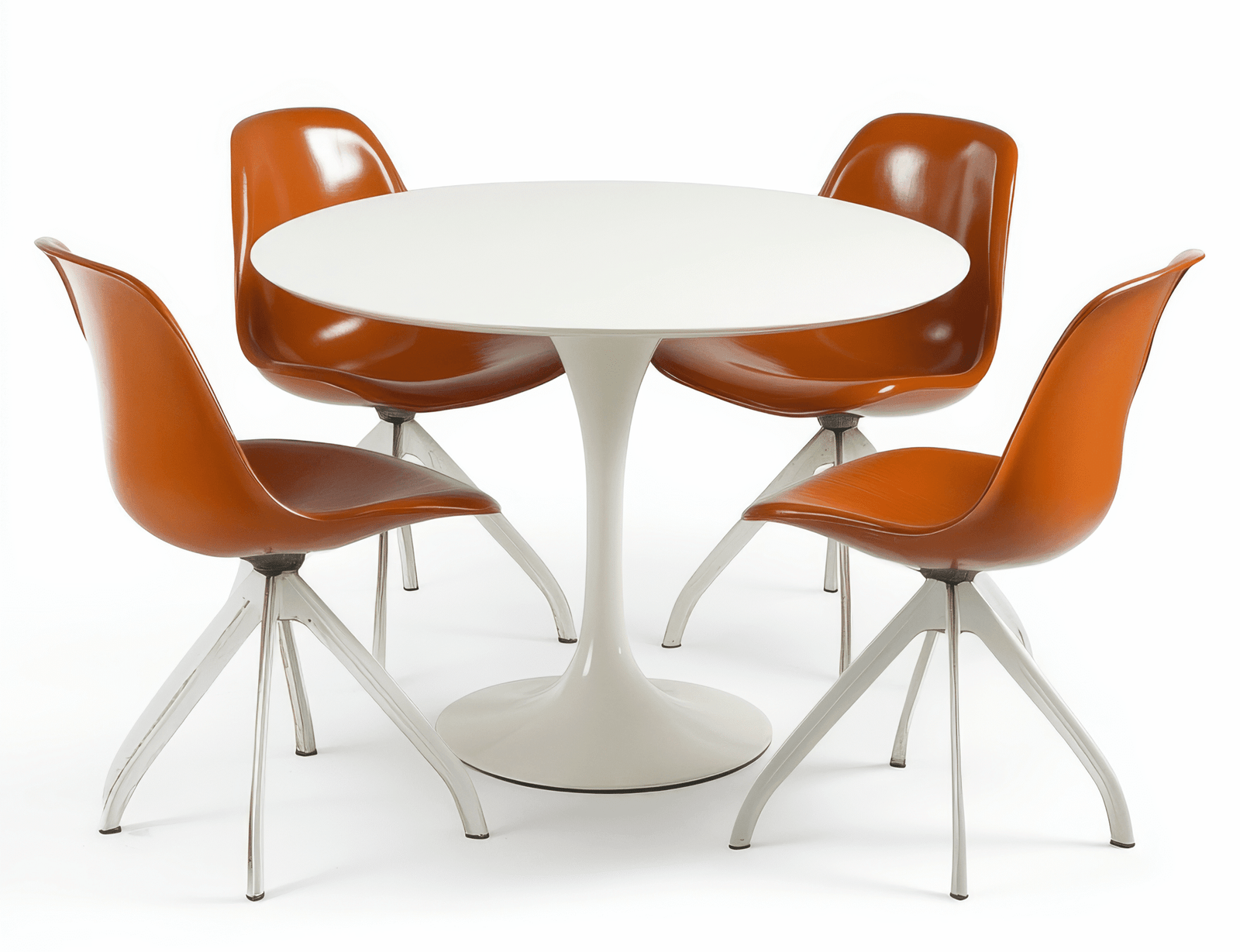
Designed in 1956 by Finnish-American visionary Eero Saarinen, the Tulip Table was born from his wish to eliminate what he called “the slum of legs” beneath traditional tables. The result was a piece of pure, sculptural lines supported by a single pedestal: a simple gesture that reshaped modern design. With its round top and graceful, cup-shaped base, the Tulip has moved through the decades with rare lightness. It adapts easily to any setting, from minimalist spaces to warm, eclectic homes and remains a symbol of harmony and proportion. Nearly seventy years later, it still appears in homes, cafés, and design projects around the world. It’s fascinating how something created so long ago continues to feel so modern. Whether in marble, wood, or glossy white finish, it preserves the same clarity of purpose: blending function and sculpture in a single gesture. Perhaps that’s the secret of the Tulip, its quiet ability to remain relevant without ever demanding attention. It simply stands there, calm and confident, reminding us that true design doesn’t age.
— Patrícia Steagall