
AN ADDRESS
Where the step decides how long it takes to arrive.
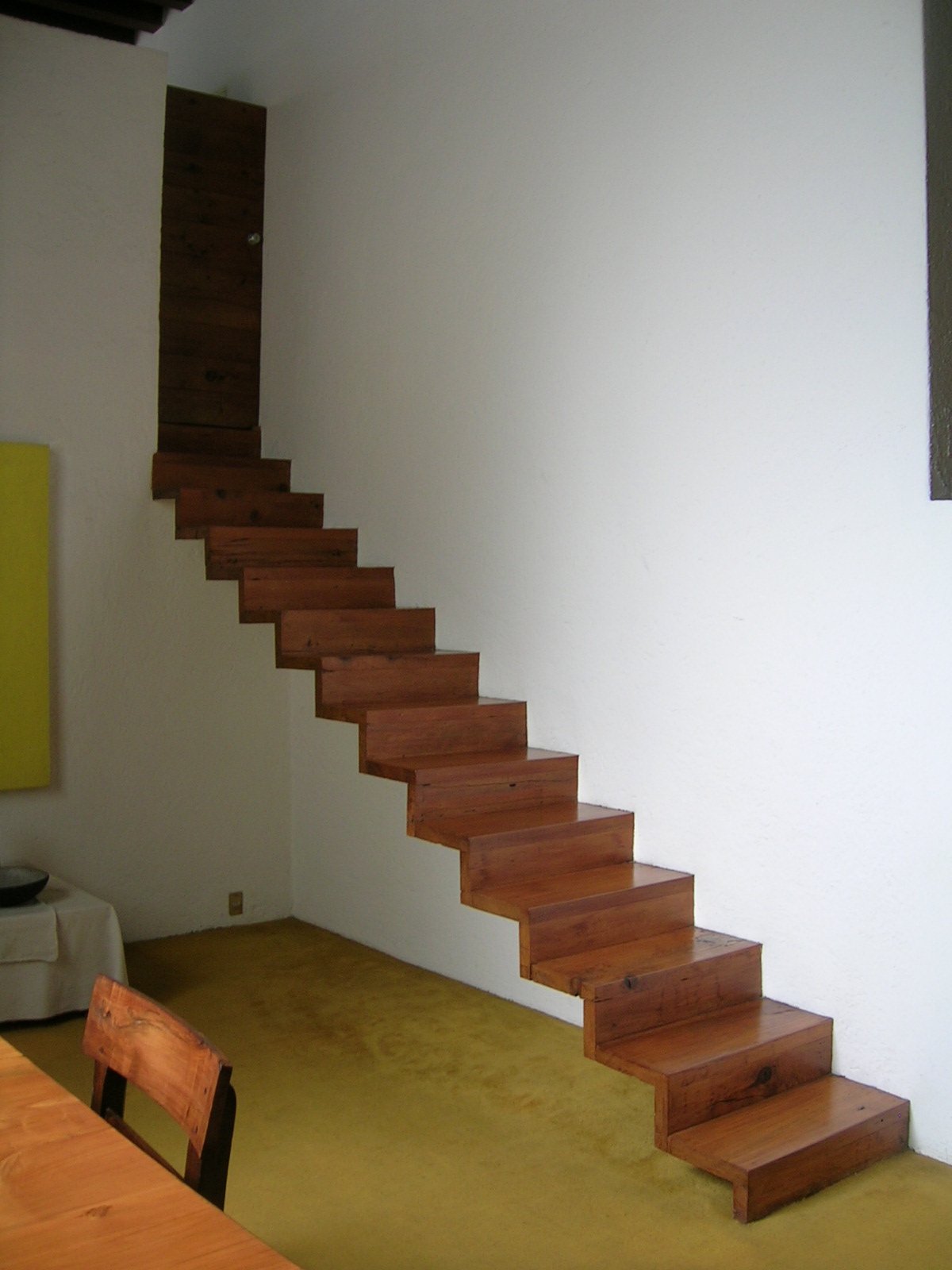
CASA LUIS BARRAGÁN, TACUBAYA, MEXICO CITY. LIBRARY STAIRCASE TO THE MUSIC ROOM. COMPLETED 1948. PHOTOGRAPH VIA WIKIMEDIA COMMONS.
The staircase in the library has no railing. Solid wood treads, cantilevered from a white plaster wall, climbing to the music room without anything to hold. The treads are wide. The risers are low. The proportions are generous enough that the foot does not hurry. Barragán designed the step to set the tempo of the ascent, and the tempo is slow.
This is the detail that photographs of Casa Luis Barragán rarely convey. The house, completed in 1948 in Tacubaya and inscribed as a UNESCO World Heritage Site in 2004, is among the most published residential interiors of the twentieth century. The pink vestibule and the rooftop terrace with its planes of terracotta and magenta against the sky appear in every survey of Latin American modernism. The color has become the subject. It should not be.

CASA LUIS BARRAGÁN. THE ROOFTOP TERRACE: HIGH WALLS BLOCK THE CITY. ONLY THE SKY IS VISIBLE. PHOTOGRAPH VIA WIKIMEDIA COMMONS.
What the house actually teaches is proportion. The corridors are narrow enough that the shoulders register the plaster. The ceilings shift height between rooms so that each threshold recalibrates the body. The windows face the garden and never the street. The living room has a double-height ceiling and a single enormous window that frames a cross on the far wall of the courtyard. Nothing in the spatial sequence is incidental. Every dimension is a decision about how long it takes to cross a room and what the body knows when it reaches the other side.
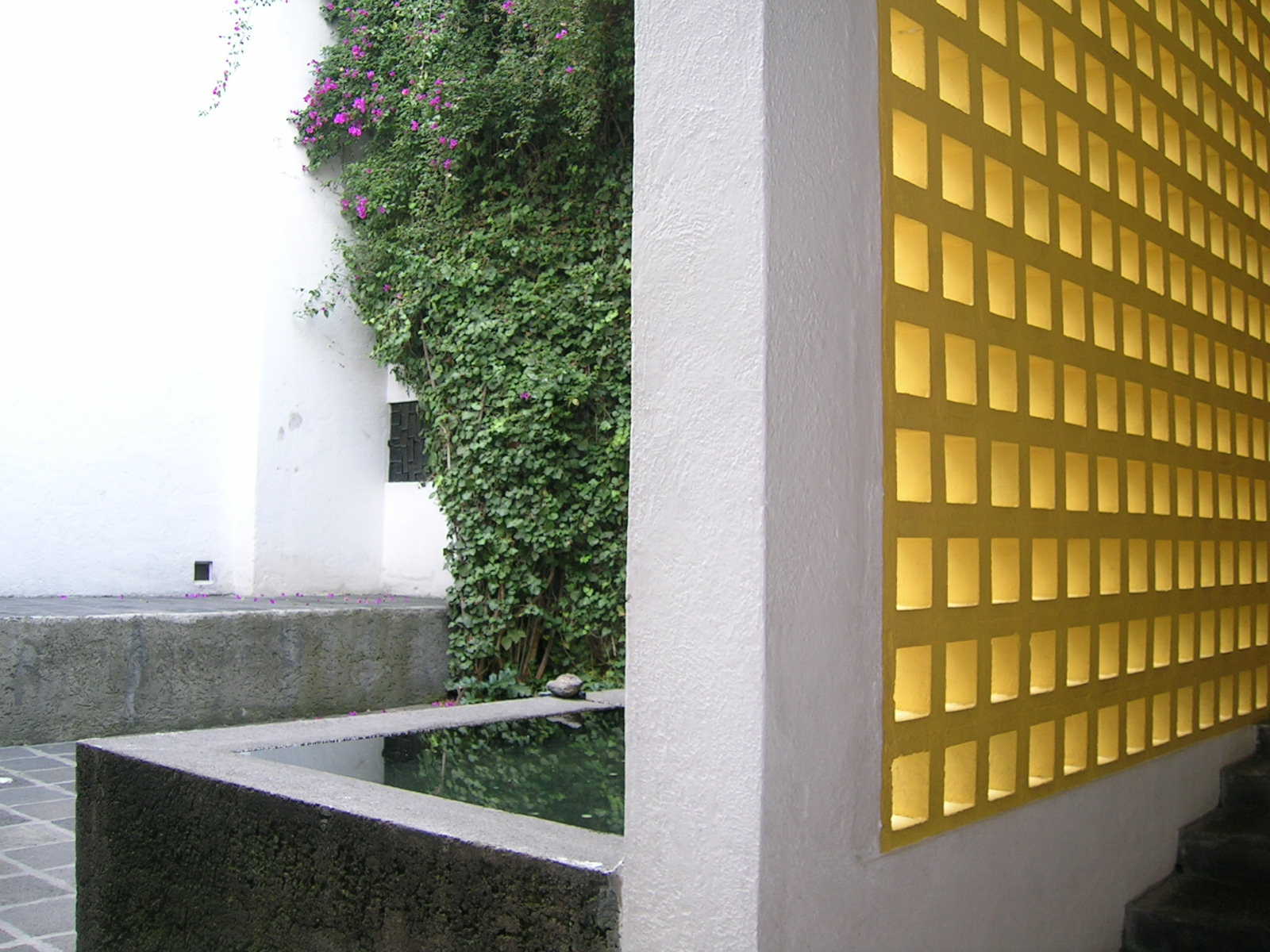
CASA LUIS BARRAGÁN. THE GARDEN PATIO WITH STONE WATER CHANNEL AND GOLDEN LATTICE SCREEN. PHOTOGRAPH VIA WIKIMEDIA COMMONS.
The stone staircase in the vestibule operates the same way. It rises without a rail toward a landing where a gold-leaf painting by Mathias Goeritz catches the light from a skylight above. The hand, without a bannister to hold, finds the wall. The plaster is warm. The step is wide. The body slows down, and the slowness is the architecture.
Barragán ate alone most evenings at a small table beside the kitchen. The ceramic plates were labeled “Soledad.” He controlled which staircases guests could use and which records played in which rooms. The house is a score written for one inhabitant, and the steps are its measure.
General Francisco Ramírez 12-14, Tacubaya, Mexico City. By appointment. Groups of twelve.
Sources: Fundación de Arquitectura Tapatía Luis Barragán; UNESCO World Heritage Centre; Avery Review; Matilda Bathurst; JSTOR Daily; Wikimedia Commons.
— The Home&Decor Editors