
Design Highlight
In Morro de São Paulo, Bahia, Alex Rebouças translates PrimeHome’s PrimeHouse concept into Oòrùn, a residence where light, landscape, and materiality become the foundation of a sensory retreat.
Photography by Paola Y Renato
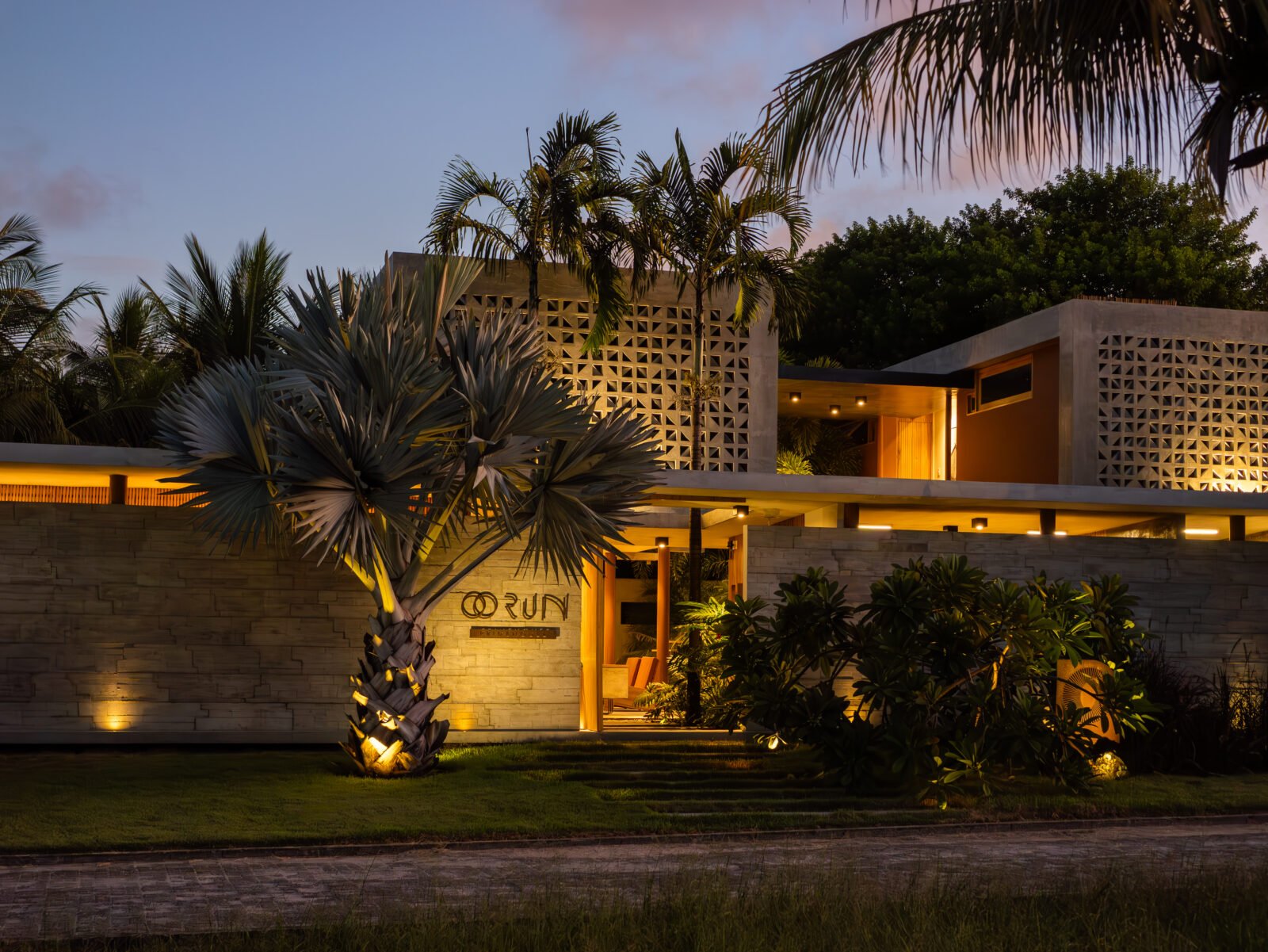
There are houses designed to frame a view, and there are houses designed to belong to it. In Morro de São Paulo, on the island of Tinharé in Bahia, Oòrùn PrimeHouse was conceived with the second intention. Named after the Yoruba word for “sunset,” the 580 m² residence by PrimeHome is less a formal gesture than an architectural response to place.
Led by Alex Rebouças, PrimeHome approaches the project as part of its PrimeHouse concept: residences developed with a strong authorial identity, where engineering, architecture, and art are treated with equal importance. In Oòrùn, that philosophy appears through a careful reading of the terrain, the climate, the vegetation, and the changing movement of light throughout the day.
The house was conceived from the ground up and developed over a long process, with one year dedicated to design and three years to construction. Building on an island brought practical challenges, from access to logistics, but the project’s complexity was not only technical. The architecture needed to offer privacy without closing itself off, permanence without heaviness, and a continuous relationship with the surrounding nature without exposing the intimacy of the interiors.
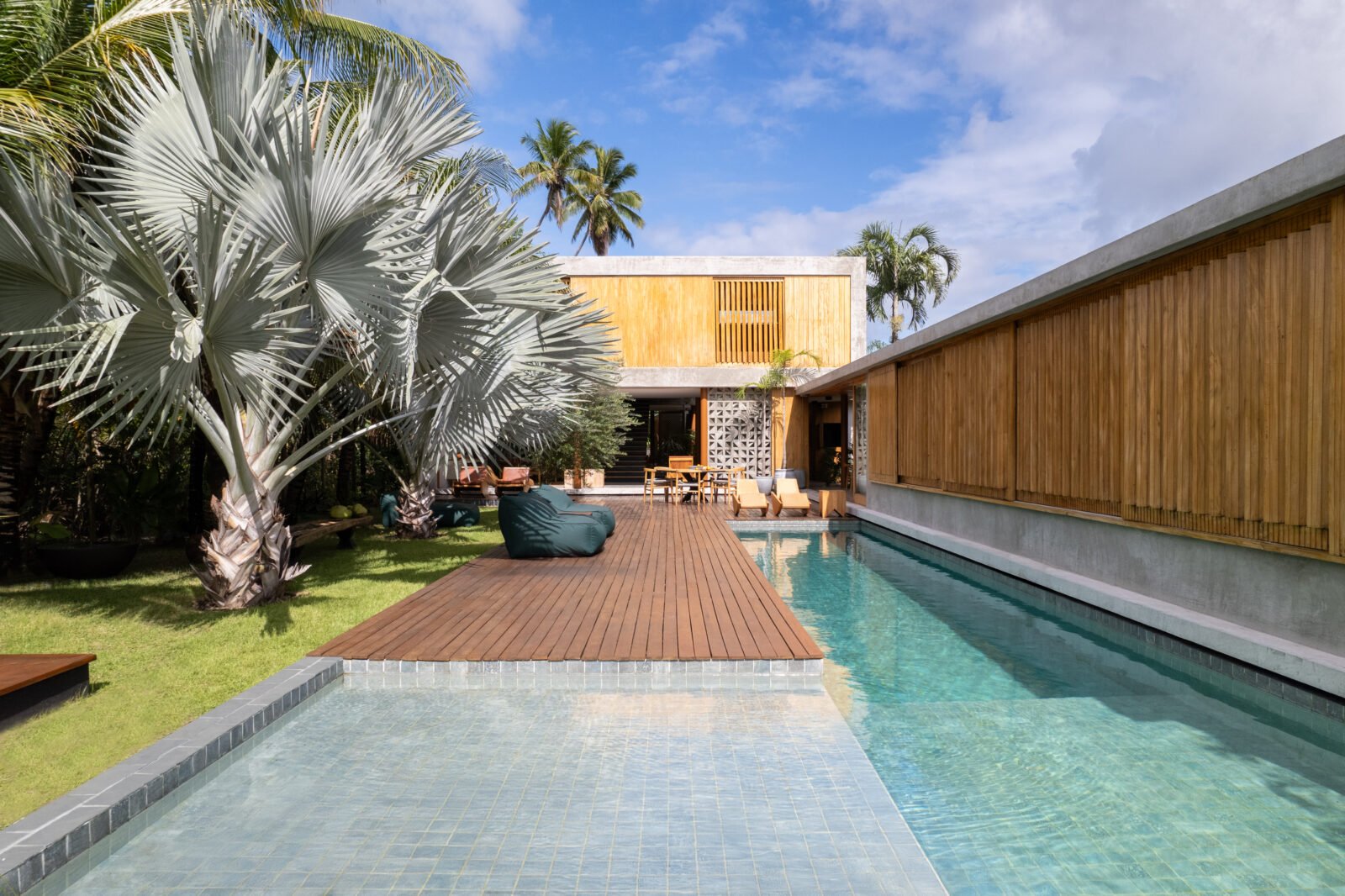
The solution appears in the composition of three articulated volumes. A longitudinal ground-floor block establishes the base of the house, while two upper volumes are positioned above it, creating terraces, internal patios, visual passages, and outdoor areas that receive light throughout the day. This configuration allows the residence to open itself to the landscape while maintaining a sense of retreat.
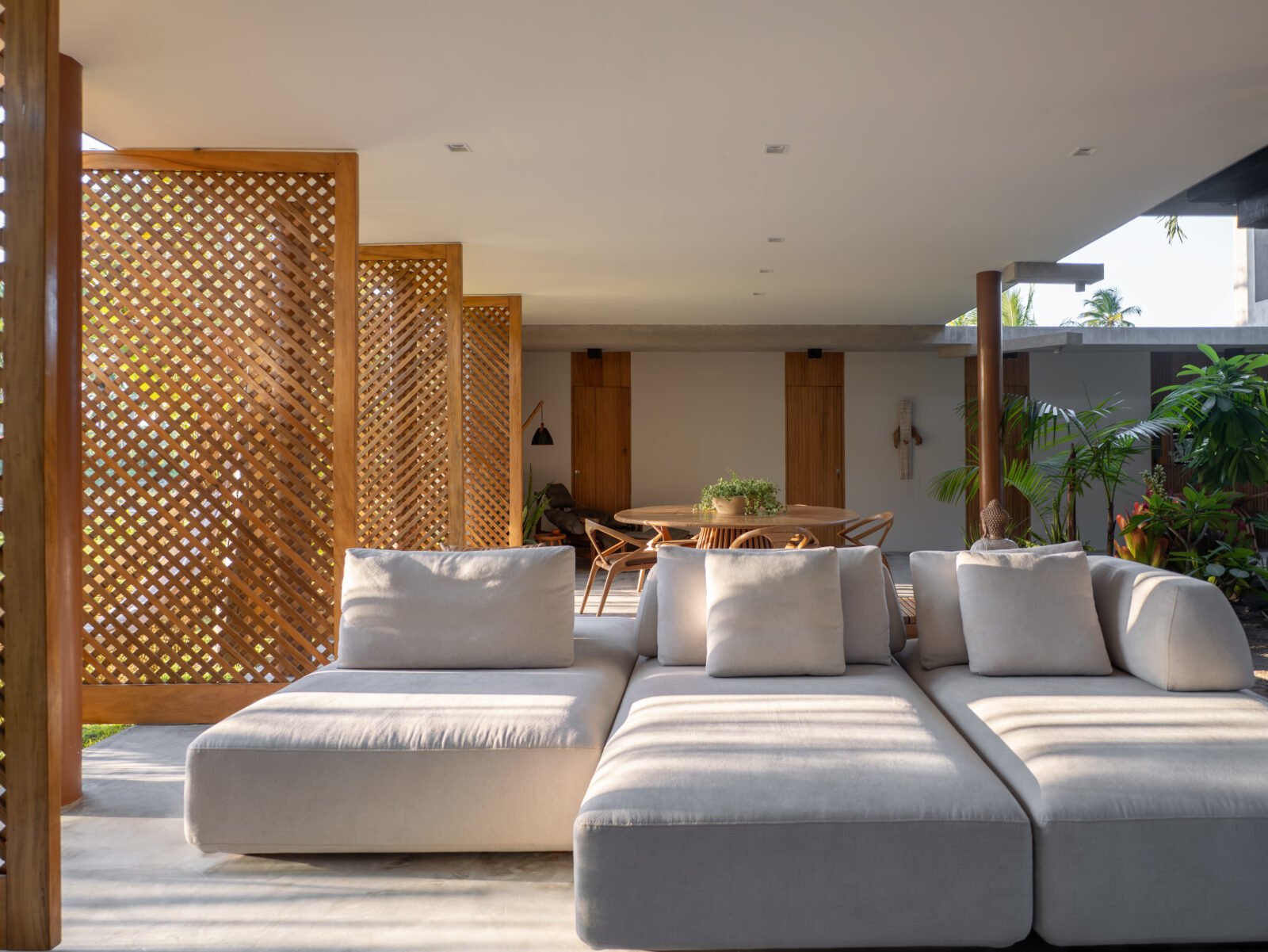
Throughout the project, environmental elements are treated as part of the architecture. Wind, shade, solar orientation, topography, native vegetation, and the sounds of the landscape are not secondary conditions. They become compositional tools. Brises, muxarabis, large glass planes, open voids, and zenithal lighting work together to filter light, promote cross ventilation, and create passive thermal comfort.
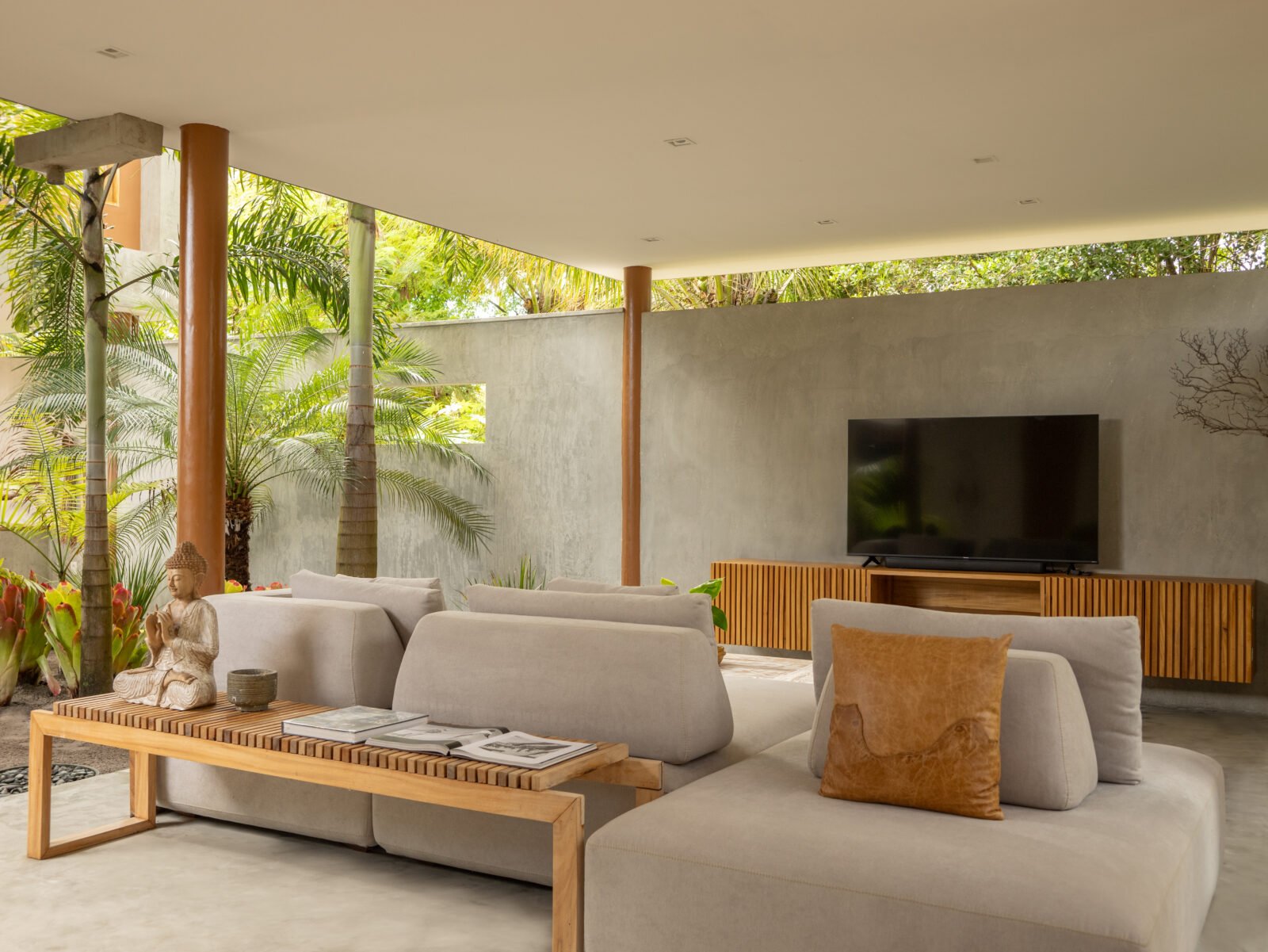
Materiality reinforces that relationship with the site. Exposed concrete, jequitibá rosa wood, corten steel, glass, light gray burned cement, and cognac-brown structural elements create a palette that is restrained but never cold. The tones remain close to nature, allowing the green of the surrounding vegetation to become the visual protagonist.
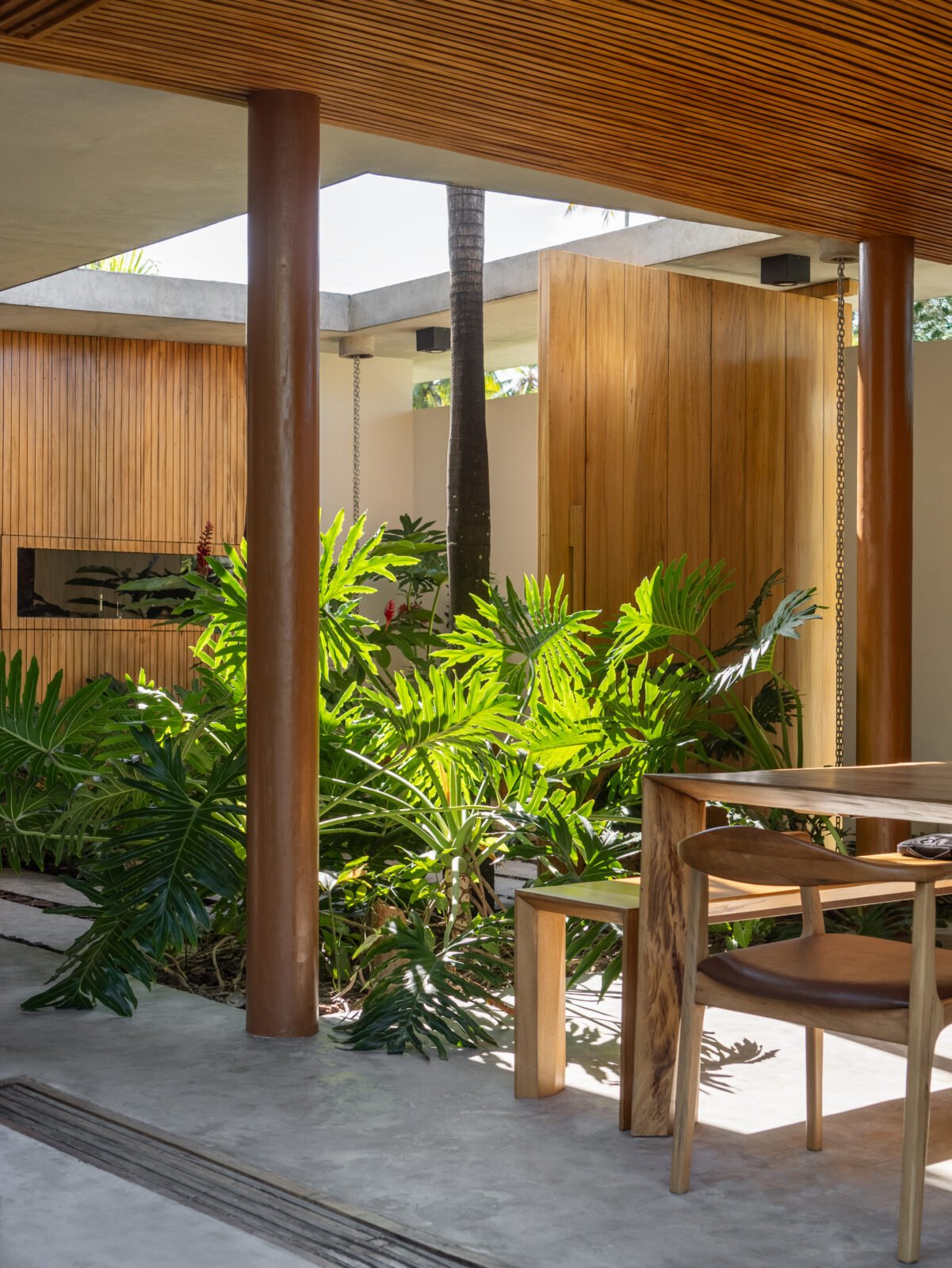
The landscape design follows the same principle. Rather than simply framing the house, native vegetation moves through it. Internal gardens, green passages, patios, and preserved species soften the boundaries between inside and outside. Nature is not treated as decoration. It becomes an active part of the spatial experience.
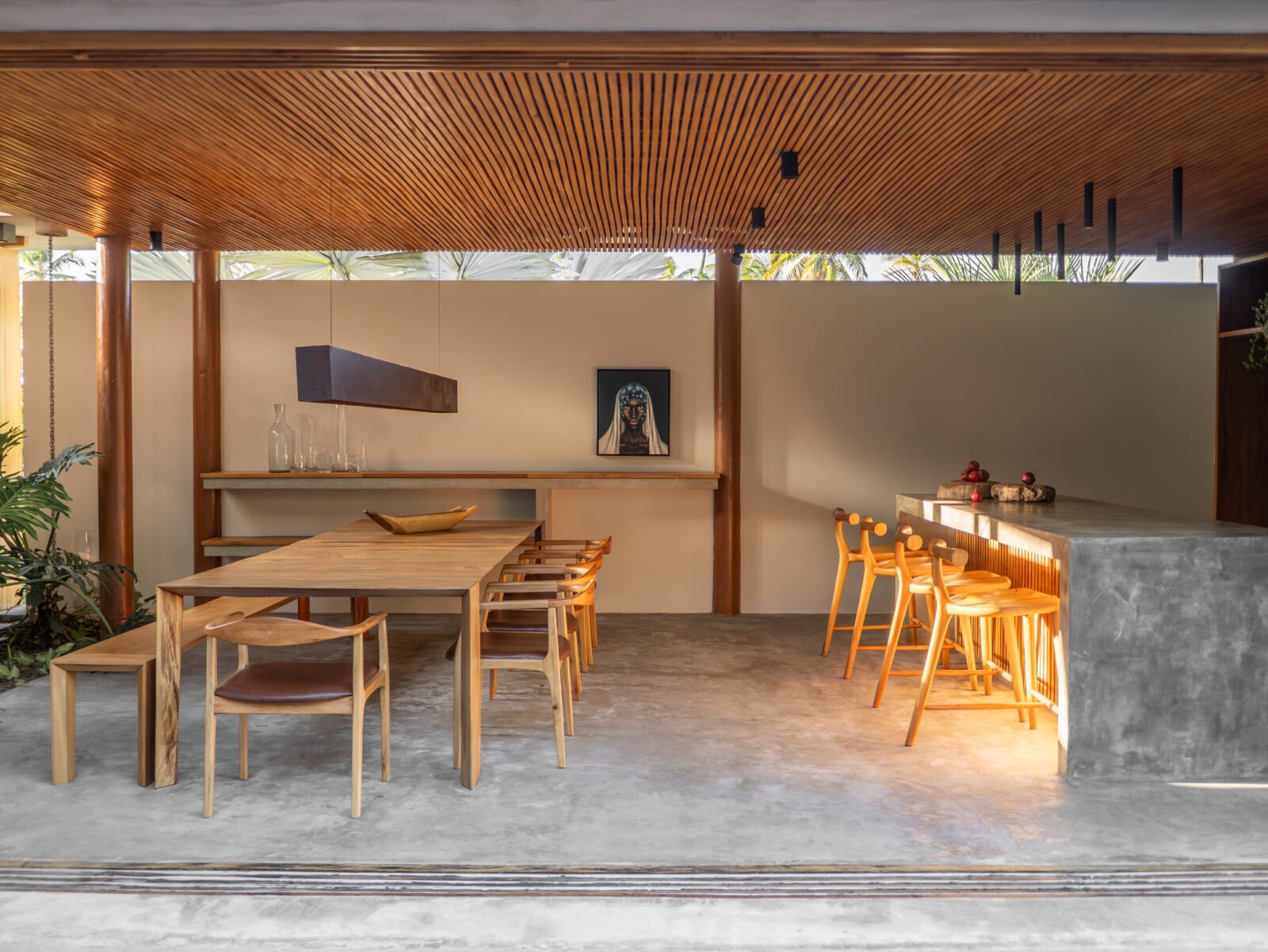
Inside, the residence was designed as a complete sensory environment. The living area connects with the internal garden, gourmet space, and kitchen, favoring both gathering and contemplation.
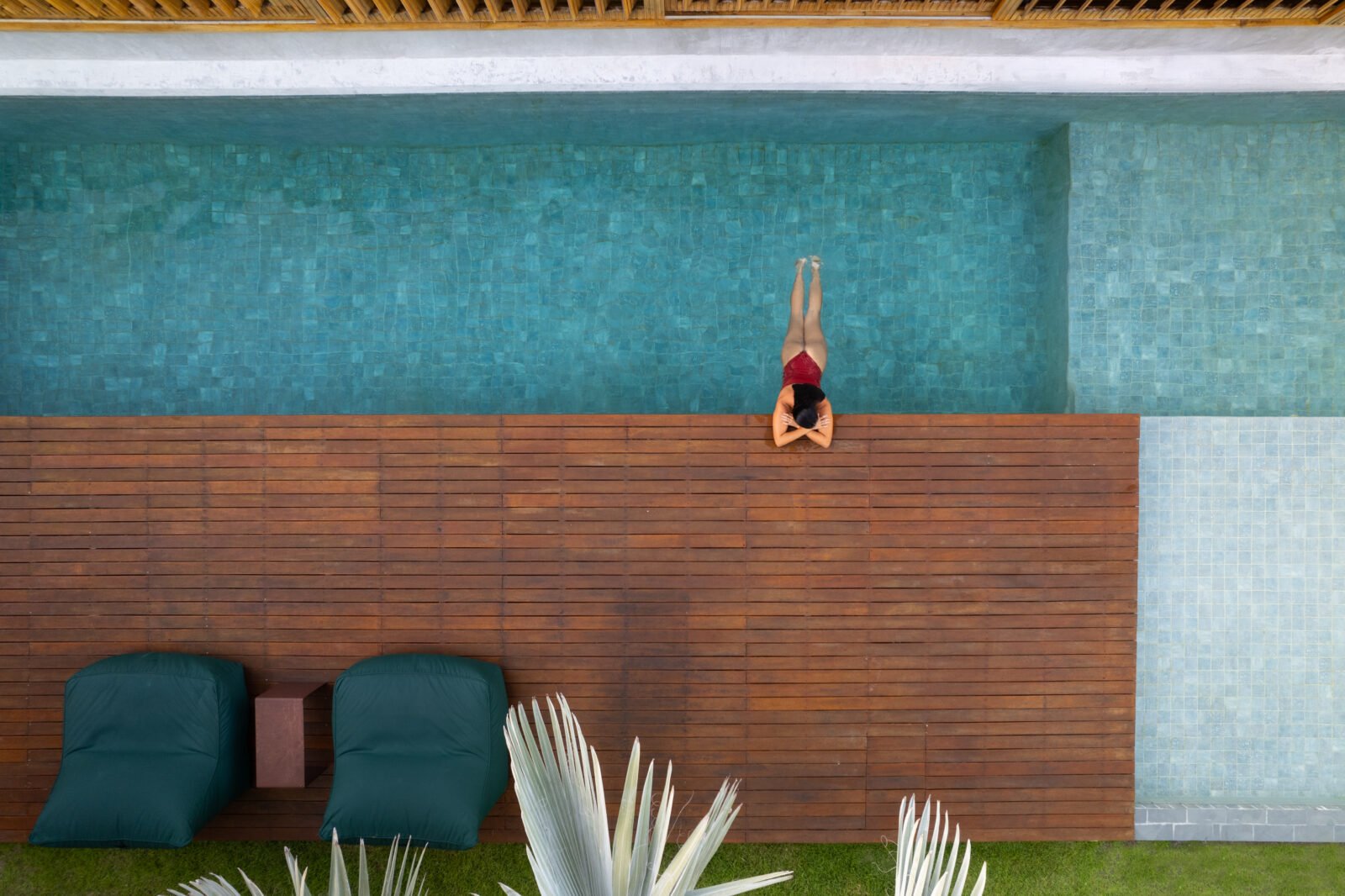
The pool, shaped by the terrain and surrounded by wood and vegetation, reflects the sky and extends the experience of the house outdoors. The sculptural staircase, finished in matte black, connects the volumes with verticality and presence.
In the private areas, movable brises in jequitibá rosa filter the light, preserve privacy, and bring the landscape into the suites. In the master bath, a skylight above the bathtub transforms a daily function into something closer to ritual: a bath under the sky, with daylight, vegetation, and, at night, stars becoming part of the architecture.
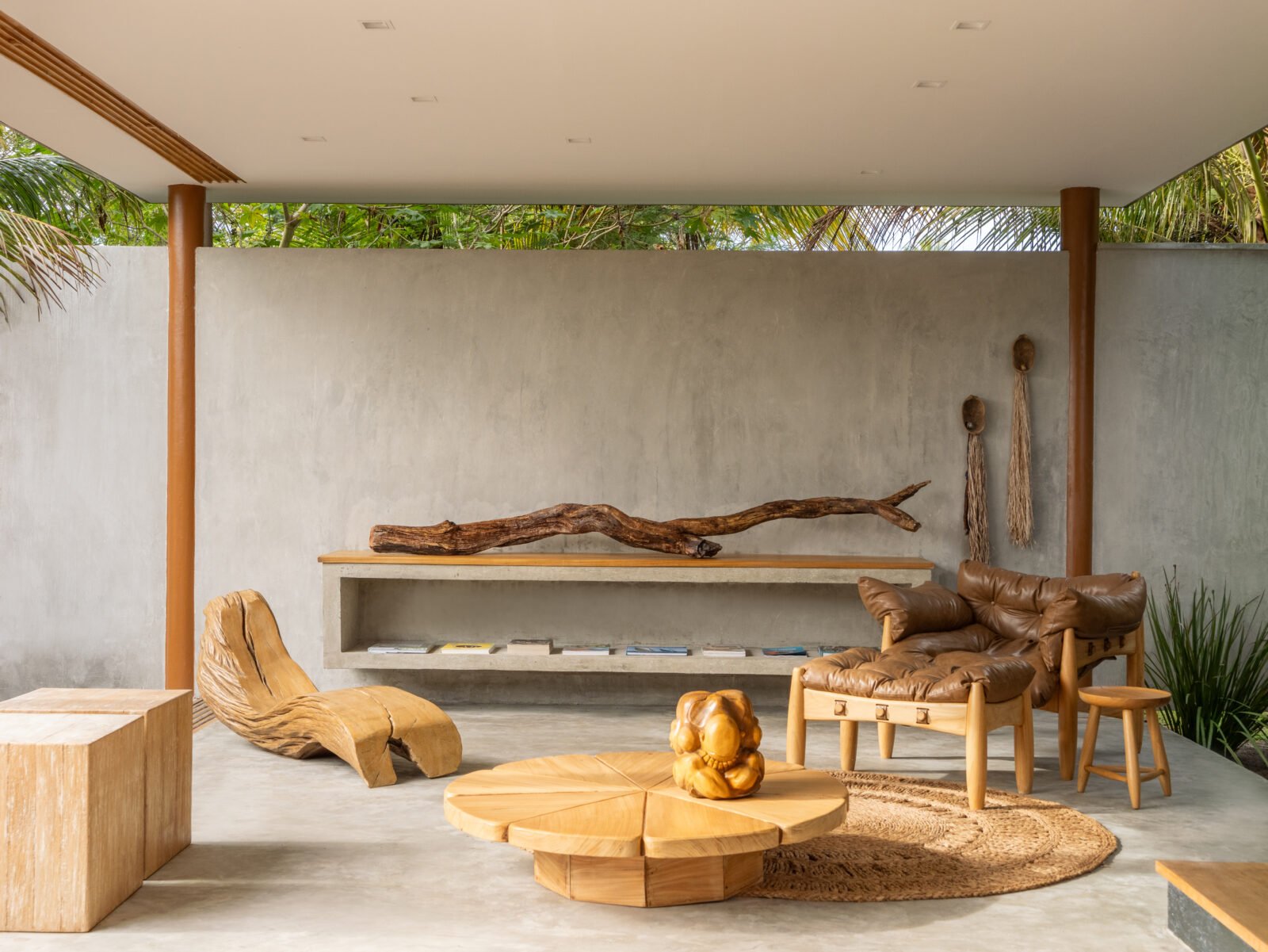
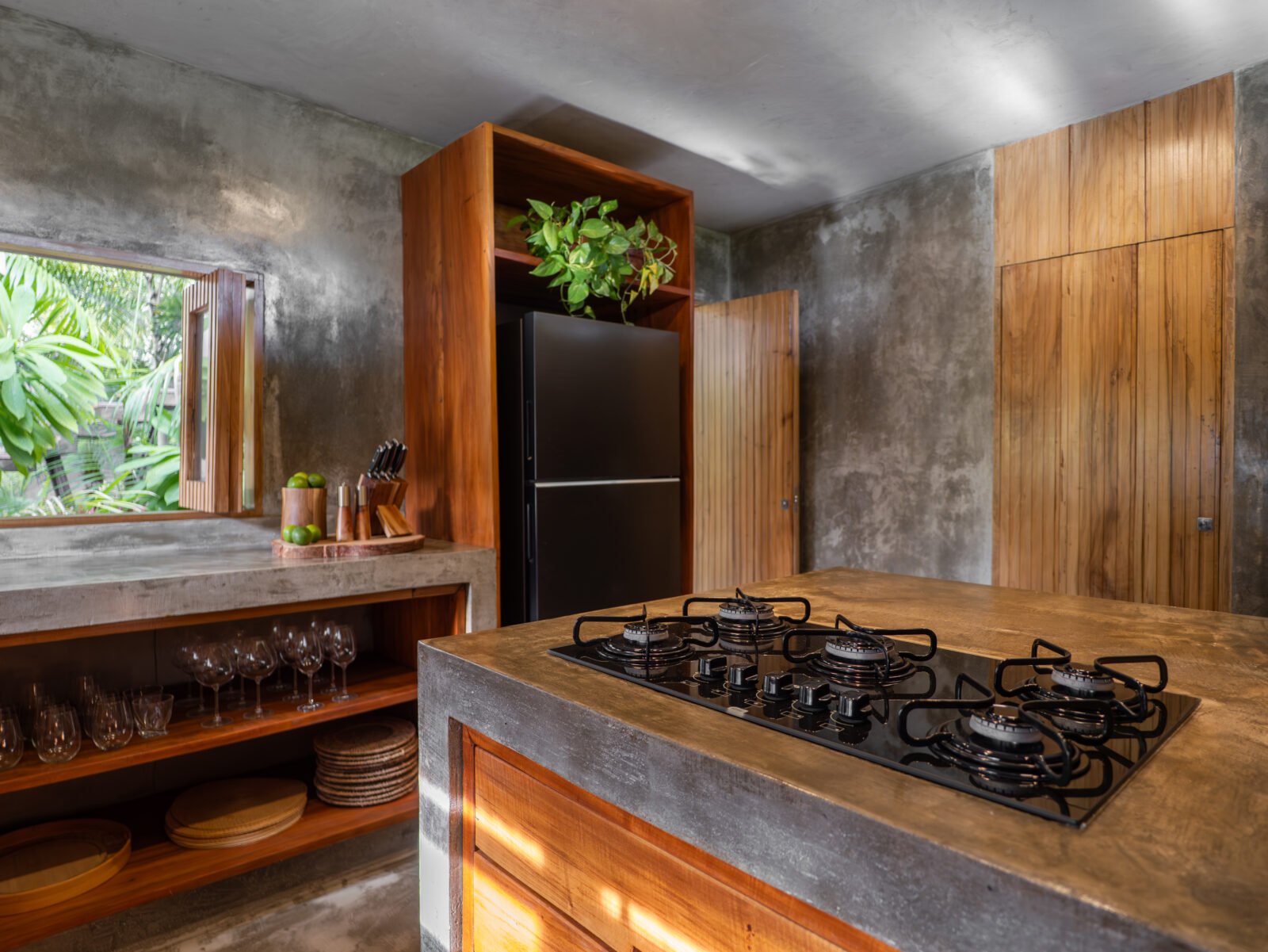
Custom design is central to the project. From furniture to openings, many elements were conceived specifically for the residence. The kitchen, with burned cement countertops molded in place, works as both functional surface and sculptural element. The millwork, furniture, and architectural details reveal clean lines, generous proportions, and materials selected for their ability to age with dignity.
Art and objects bring another layer to the house. Pieces collected through PrimeHome’s history and partnerships appear alongside works by Brazilian artists and handcrafted elements. A painting by Igor Rodrigues, an African wood sculpture, natural fiber rugs from Trancoso, ceramics from Maragogipinho, and custom pieces signed by PrimeHome help build an interior that feels personal without excess.
Oòrùn PrimeHouse is not built around spectacle, although the landscape is undeniably cinematic. Its strongest quality is quieter: the ability to let time become visible. The light changes. The shadows move. The vegetation grows. The house responds.
In that sense, Oòrùn is not only a beach residence. It is a way of inhabiting the landscape with attention. A house that does not impose itself on the island, but enters into conversation with it.
PR: F galeria | www.fgaleria.com.br | @fgaleria